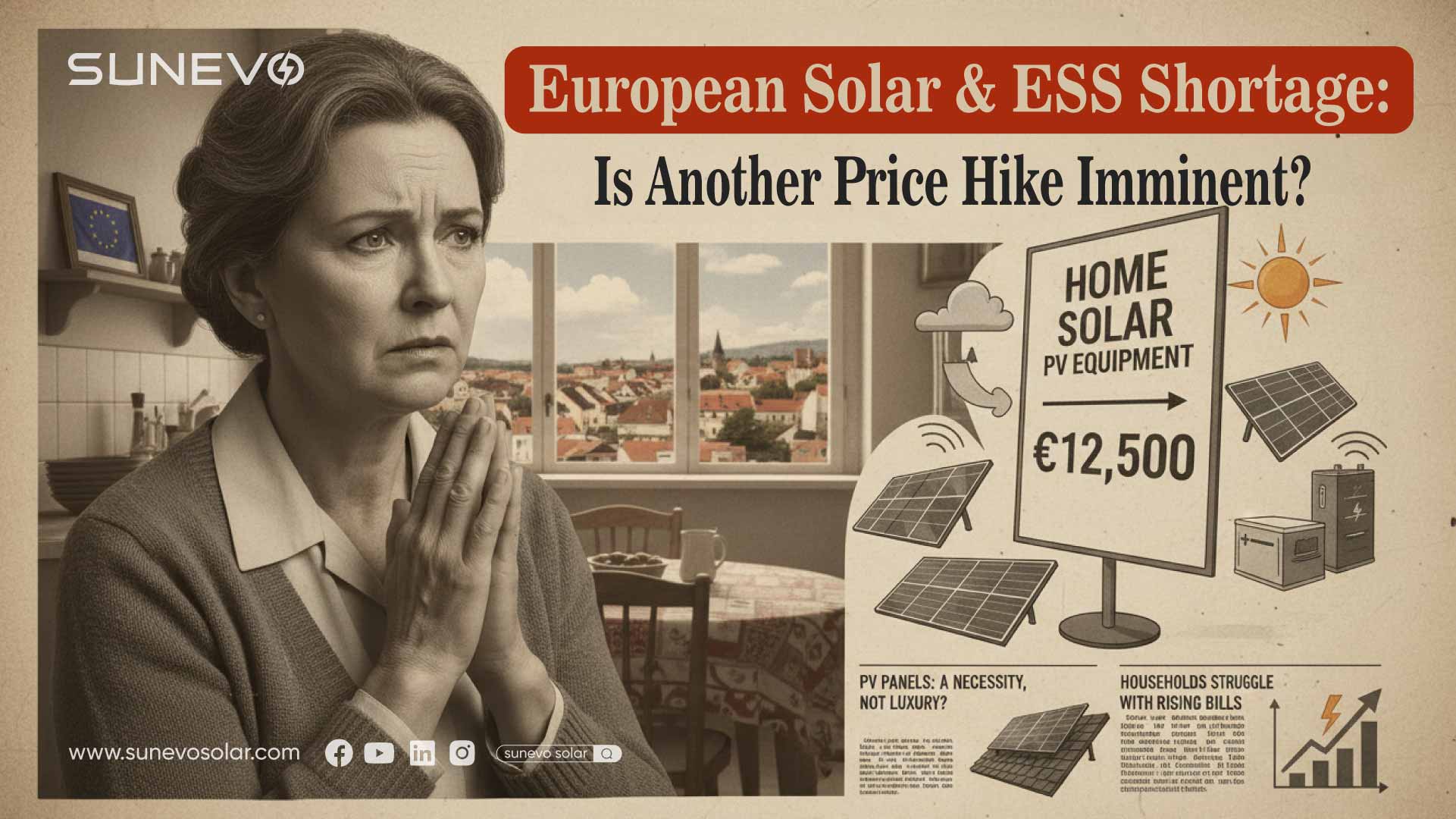
The ripple effects triggered by disruptions to shipping in the Strait of Hormuz continue to roil the European energy landscape; consequently, the local solar-plus-storage market is experiencing a new wave of surging orders, further exacerbating the imbalance between supply and demand.
In March 2026, under the dual pressures of escalating geopolitical conflicts and extreme volatility in international natural gas prices, wholesale electricity prices in numerous European nations soared to their annual peaks, directly igniting a surge in demand for photovoltaic (PV) and energy storage products. Prices for mainstream PV modules rose in tandem, while high-efficiency modules and residential energy storage systems fell into short supply. Downstream distributors and system integrators have shifted into "stockpiling mode," marking the official entry of the European solar-plus-storage market into a period of explosive demand growth.
Electricity Prices Hit New Highs; Reliance on Natural Gas Emerges as Key Differentiating Factor
According to the latest data released by AleaSoft Energy Forecasting—a leading authority on European electricity market projections—wholesale electricity prices in core European economies, including Germany, the Netherlands, Italy, and Belgium, climbed across the board to their highest levels of the year in March 2026. Notably, Italy’s daily average electricity price reached €168.54/MWh on March 10, marking a single-day peak not seen in nearly a year and sharply highlighting the mounting pressure from energy costs.
In terms of regional performance, the magnitude of electricity price increases varied significantly across European nations. The fundamental root cause of this divergence lies in the differing degrees to which each country's domestic power generation mix relies on natural gas. Data from the consultancy firm Ember reveals that Spain—benefiting from the large-scale expansion of renewable energy sources, such as wind and solar power, since 2019—saw natural gas influence electricity prices during only 15% of all operating hours; consequently, its price volatility remained significantly lower than the overall EU average. In contrast, Italy remains heavily dependent on natural gas for both power generation and system flexibility. This reliance directly drove up marginal electricity costs—impacting prices during 89% of operating hours—making it the primary reason for Italy leading the EU in the magnitude of electricity price increases, while also serving as a compelling validation of the critical role renewables play in stabilizing electricity prices.
It is important to note, however, that high wholesale electricity prices do not automatically translate into improved economic viability for end-users installing solar-plus-storage systems. Various ancillary regulations—including national retail electricity price caps, grid interconnection rules, and net metering mechanisms—continue to exert a profound influence on users' investment decisions. However, expectations of persistently rising electricity prices have comprehensively heightened energy price risk awareness and supply security anxieties among European households and commercial and industrial entities. The core value of solar-plus-storage systems—specifically their ability to enable self-consumption, reduce costs, and ensure supply reliability—has gained widespread market recognition, becoming the primary driver behind the current surge in demand.
On March 15, the UK government announced a series of measures to accelerate the expansion of clean energy and safeguard the nation's energy security. These measures include: bringing forward the AR8 offshore wind auction to launch in July 2026; and introducing, for the first time, "plug-and-play" solar panels available for households to purchase and install on balconies or in outdoor spaces.
Comprehensive Demand Boom: Surging Orders and Structural Price Increases
The explosive growth in market demand is vividly reflected in several key industry metrics: the European Photovoltaic Purchasing Managers' Index (PMI) has soared to 69—marking a new high since May 2025—underscoring the industry's sustained upward trajectory. German energy giant E.ON revealed that demand for solar PV installations among German households has currently doubled compared to previous periods; concurrently, demand for complementary green energy equipment—such as heat pumps and EV charging stations—has also surged, signaling a comprehensive heating-up of the distributed green energy ecosystem.
This massive surge in demand, compounded by lags in global supply chain response, has quickly plunged the European solar-plus-storage market into a "shortage crisis." In particular, the supply-demand gap for core product categories—such as residential energy storage systems and high-efficiency solar modules—continues to widen, leading to ever-lengthening lead times and rising prices. According to an analysis released this week by InfoLink Consulting, rising natural gas prices in Europe—driven by geopolitical conflicts in the Middle East—have further stimulated demand for residential solar PV and solar-plus-storage solutions. Currently, in most markets, whether for distribution channels or project tenders, quoted prices have reached the range of $0.12–$0.13 per watt (FOB), with expectations for further price increases remaining high for April and beyond.
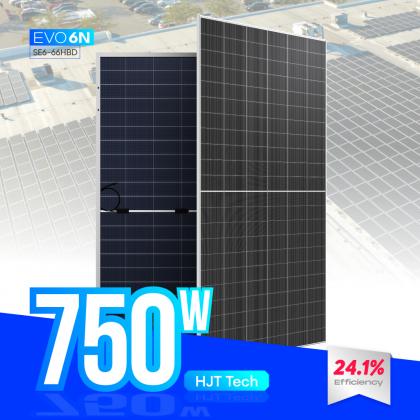
A European distributor noted: "Electricity prices in certain parts of Europe have skyrocketed by 50%. Last week, it was impossible to even book a truck to pick up cargo from Rotterdam. Core products—specifically 450W 'all-black' modules, which are ideally suited for the distribution market, and energy storage systems designed for emergency backup scenarios—are currently in short supply."
Moreover, local European distributors are also racing to secure inventory. According to incomplete statistics from *Polaris Solar PV Network*, since the beginning of 2026, leading PV enterprises have secured module orders in the European market totaling over 5 GW. Order concentration among these top-tier manufacturers is exceptionally high: LONGi Green Energy secured 2.6 GW in orders—including a single partnership agreement with Energy 3000 accounting for 2 GW alone; Tongwei Co., Ltd. signed supply agreements for 1.5 GW of high-efficiency modules with distributors in Italy and Poland; and JinkoSolar secured orders for nearly 1 GW of high-efficiency modules from distributors across the UK, France, Germany, Italy, and other nations.
Demand in the energy storage sector is equally robust, with Chinese energy storage enterprises leveraging their technological and production capacity advantages to secure substantial orders in the European market. Since the start of 2026, the total volume of solar-plus-storage orders signed by Chinese manufacturers in Europe has reached 4.4 GWh: Sungrow signed a framework agreement for 1 GWh of battery energy storage systems with Switzerland-based Delta Capacity; LONGi Green Energy secured 600 MWh in energy storage orders within the Western European market; and HyperStrong, having cultivated a deep presence across more than a dozen European countries, secured nearly 3 GWh in utility-scale (100 MW-class) energy storage projects.
In the short term, there are no signs of abatement in Europe's geopolitical energy conflicts; natural gas supply bottlenecks are expected to persist, and the prevailing landscape of high electricity prices is unlikely to reverse anytime soon. Consequently, demand for solar-plus-storage installations is projected to remain at elevated levels. In the medium to long term, the EU's established renewable energy and emission reduction targets remain unchanged, while the imperative for individual nations to reduce their reliance on energy imports and achieve energy independence continues to intensify. As such, the high level of market buoyancy currently observed in the European solar-plus-storage sector enjoys solid support from both policy frameworks and underlying market demand.
However, it is essential to remain vigilant, as the European solar-plus-storage market is not without its hurdles; it currently faces multiple policy-related and structural risks. For instance, Germany is set to discontinue subsidies for newly installed residential rooftop PV systems starting in 2027. Meanwhile, France's energy regulatory body has lowered the feed-in tariffs for PV systems with capacities of 100 kW or less for the period between April and July 2026, with subsidies for surplus electricity fed back into the grid being reduced in tandem.



 rede ipv6 suportada

 English
 français
 Deutsch
 italiano
 español
 العربية
 日本語
日本語 Polski
 ไทย
ไทย